


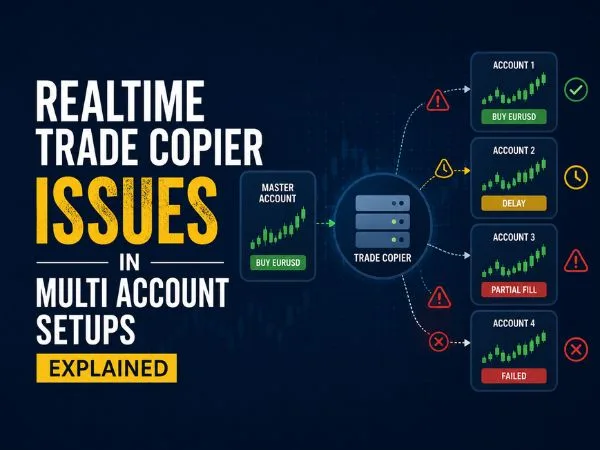

A realtime trade copier should make your trading consistent across multiple accounts without constant manual adjustments. The goal is simple: one strategy, same execution everywhere, within an acceptable difference in timing and price. However, in practice, things can drift apart quickly, especially in fast-moving markets.
A structured setup helps avoid most issues. That means defining upfront what gets copied and what does not. For example, copying only entries, or also stop loss and take profit levels. The same applies to order types, whether you include only market orders or also limit and stop orders.
TradeSyncer.com helps define rules before scaling
A platform like TradeSyncer.com focuses on locking in clear rules before expanding your setup. This approach reduces inconsistencies early on, because your copier is not guessing how to behave in different scenarios.
Instead of adjusting things on the fly, you define:
- Which instruments are copied
- Which order types are included
- How positions are sized per account
By doing this first, you create a stable foundation before increasing complexity.
Why realtime behaves differently across brokers
“Realtime” is not identical across brokers. Each broker processes orders slightly differently, which becomes noticeable during high volatility or low liquidity.
You may see:
- Different fill times between accounts
- Slight price differences on entries
- Variations in spreads or tick sizes
These differences are not errors, but part of how the trading environment works. A trade copier operates within a chain of factors, including platform, connection, broker, and market conditions. Understanding this helps you set realistic expectations and maintain better synchronization.
Risk management per account prevents bigger problems
One of the most common issues in multi-account setups is assuming all accounts behave the same. In reality, differences in margin, leverage, and contract specifications can cause mismatches.
Without proper limits, this leads to:
- Orders being skipped on certain accounts
- Position sizes becoming inconsistent
- Strategies drifting apart over time
A better approach is to define limits per account. This includes maximum position size, daily loss limits, and clear sizing rules such as fixed lots or proportional scaling. By doing this, each account stays aligned with the strategy while respecting its own constraints.
Small differences can grow into bigger issues
Many problems do not appear as clear errors. Instead, they start as small inconsistencies that grow over time.
Examples include:
- Stop loss levels differing slightly between accounts
- Partial fills causing uneven position sizes
- Orders being delayed or skipped
Catching these early is key. A simple monitoring routine helps:
- Verify symbol mapping and contract specifications
- Check logs for skipped or modified orders
- Test scenarios like volatility spikes or reconnections
- Define acceptable differences in timing and slippage
- Pause copying when limits are exceeded
By acting early, you prevent chain reactions that affect future trades.
When manual trading or smaller setups work better
A trade copier is not a set-and-forget tool. It requires monitoring and periodic adjustments. In some cases, starting smaller or staying manual is the better choice.
This is especially true when:
- Your strategy depends on precise entries, such as scalping
- You have limited time to monitor synchronization
Starting with one or two accounts and a limited number of instruments allows you to validate your setup. Once stability is confirmed, scaling becomes much easier.
Build a stable setup before scaling
A realtime trade copier works best when structure comes first. Clear rules, per-account limits, and consistent monitoring create a setup that behaves predictably.
With a platform like TradeSyncer.com, the focus is on building that structure first. This reduces errors, improves consistency, and makes scaling across multiple accounts more reliable.